strasbourg tours

Quick Information

RECOMMENDED DURATION

2 hours

VISITORS PER YEAR

600000

EXPECTED WAIT TIME - STANDARD

30-60 mins (Peak), 0-30 mins (Off Peak)

Plan your visit

Did you know?

After being destroyed during the Thirty Years' War in 1633, the castle remained abandoned until a major restoration project began in the early 20th century.

The castle was restored between 1900 and 1908 on the orders of Emperor Wilhelm II, who wanted to revive a symbol of the region's medieval past.

Sitting at nearly 800 meters above sea level, the fortress once monitored key trade and wine routes crossing Alsace.

From Colmar: Haut-Koenigsbourg Castle & Alsace Villages Tour with Wine Tasting

Free cancellation
Book now, pay later
8 hrs
Guided tour

Why visit Haut-Koenigsbourg Castle?

🏰 One of France's best-preserved medieval castles

Unlike many castle ruins, Haut-Koenigsbourg features restored halls, furnished rooms, defensive walls, and towers that offer a rare glimpse into medieval fortress life.

🌄 Panoramic views across three countries

From the ramparts, enjoy sweeping views of the Alsace plain, the Vosges Mountains, Germany's Black Forest, and, on exceptionally clear days, the Swiss Alps.

⚔️ A fortress built for defense

Explore drawbridges, moats, cannons, watchtowers, and fortified gates that showcase how medieval strongholds were designed to withstand attack.

🍇 An easy addition to an Alsace day trip

Located near the region's famous wine route and storybook villages, the castle pairs perfectly with stops in Riquewihr, Kaysersberg, Ribeauvillé, or Colmar.

Highlights of Haut-Koenigsbourg Castle
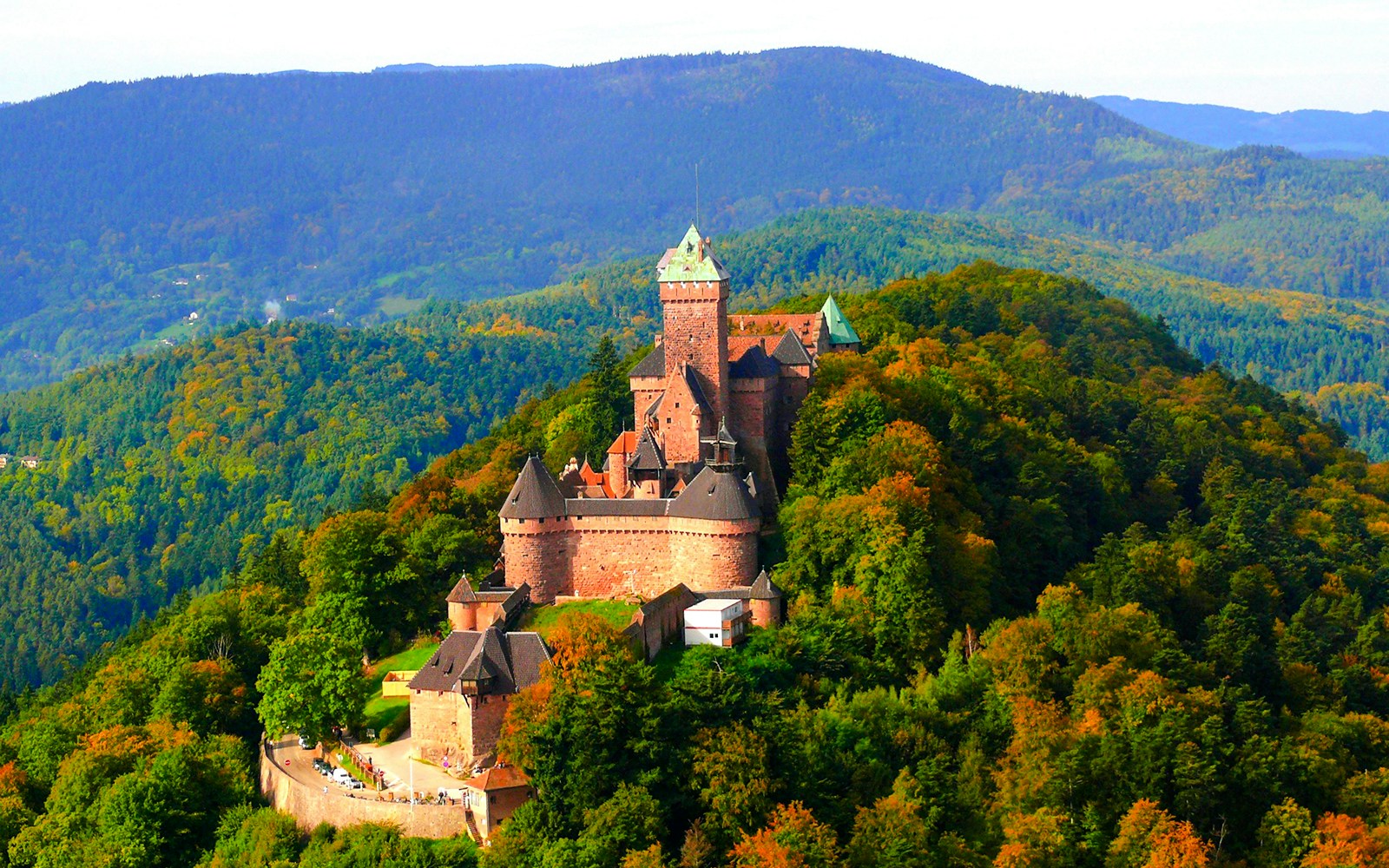
Haut Koenigsbourg Castle surrounded by dense forest in Alsace, France.

Grand keep (Dungeon)

The castle's highest defensive tower offers some of the best views of the surrounding countryside and showcases the strategic importance of the fortress.

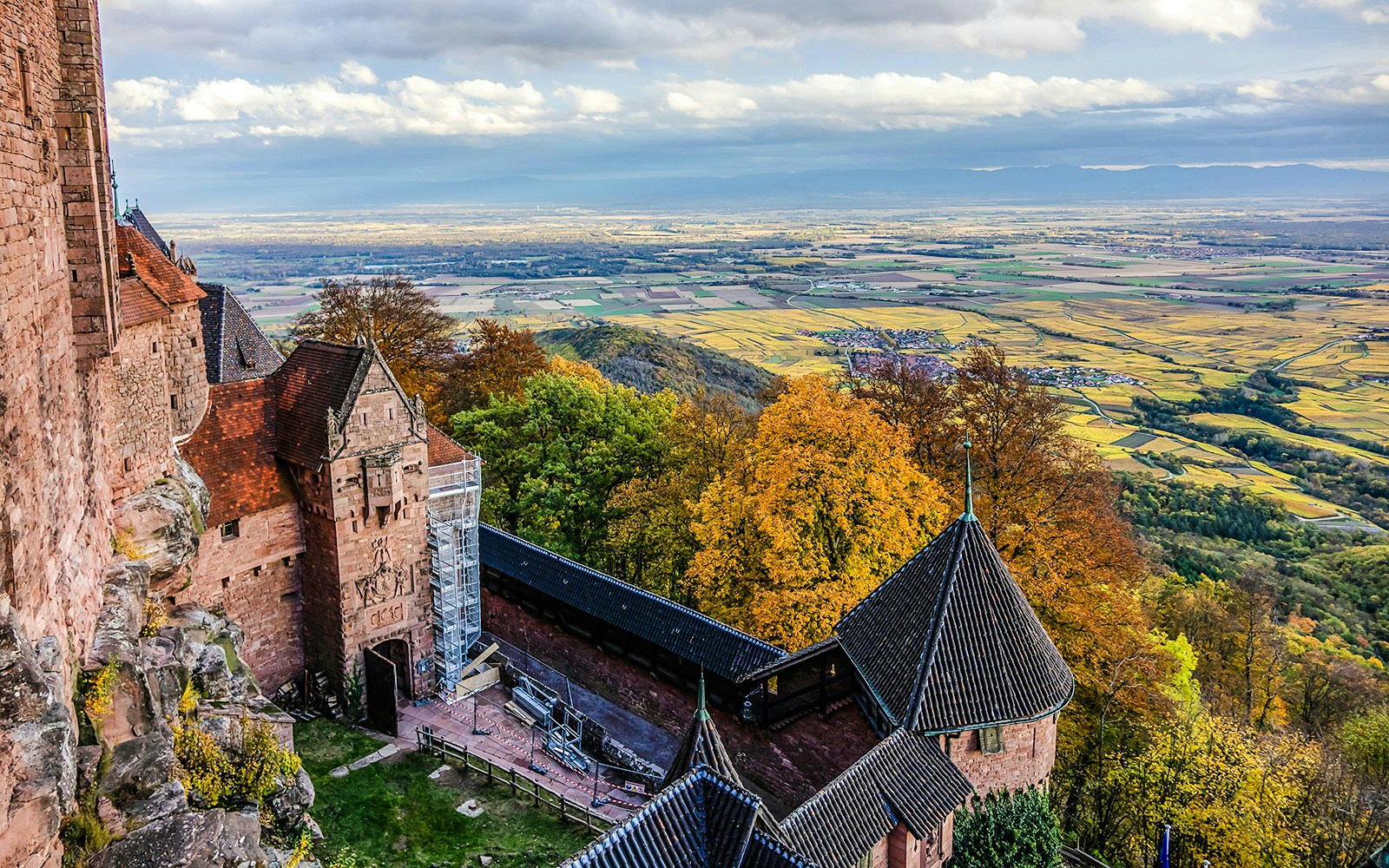
Aerial view from Haut-Koenigsbourg Castle overlooking Alsace countryside and autumn foliage.
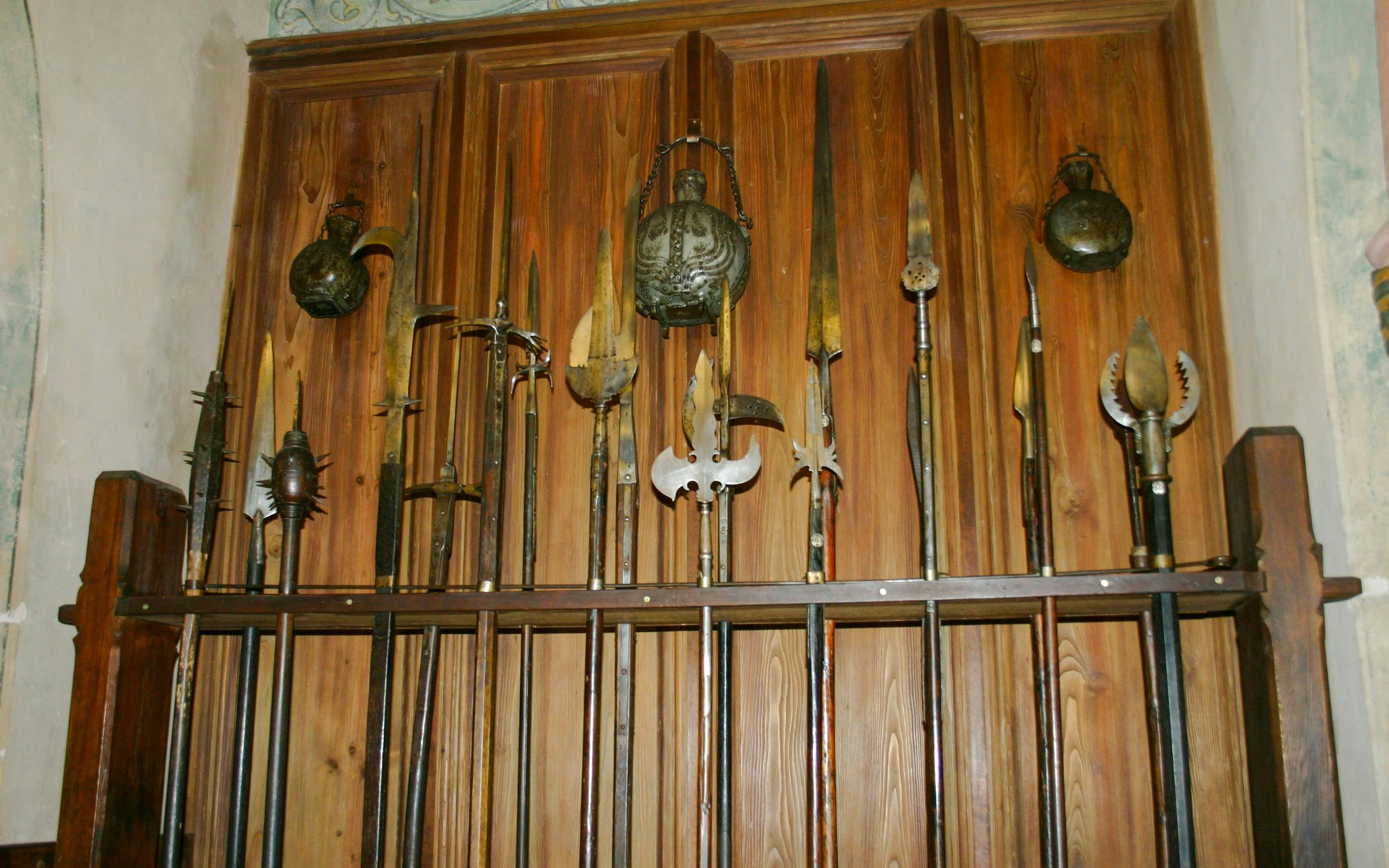
Medieval weapons display at Haut-Koenigsbourg Castle, France.
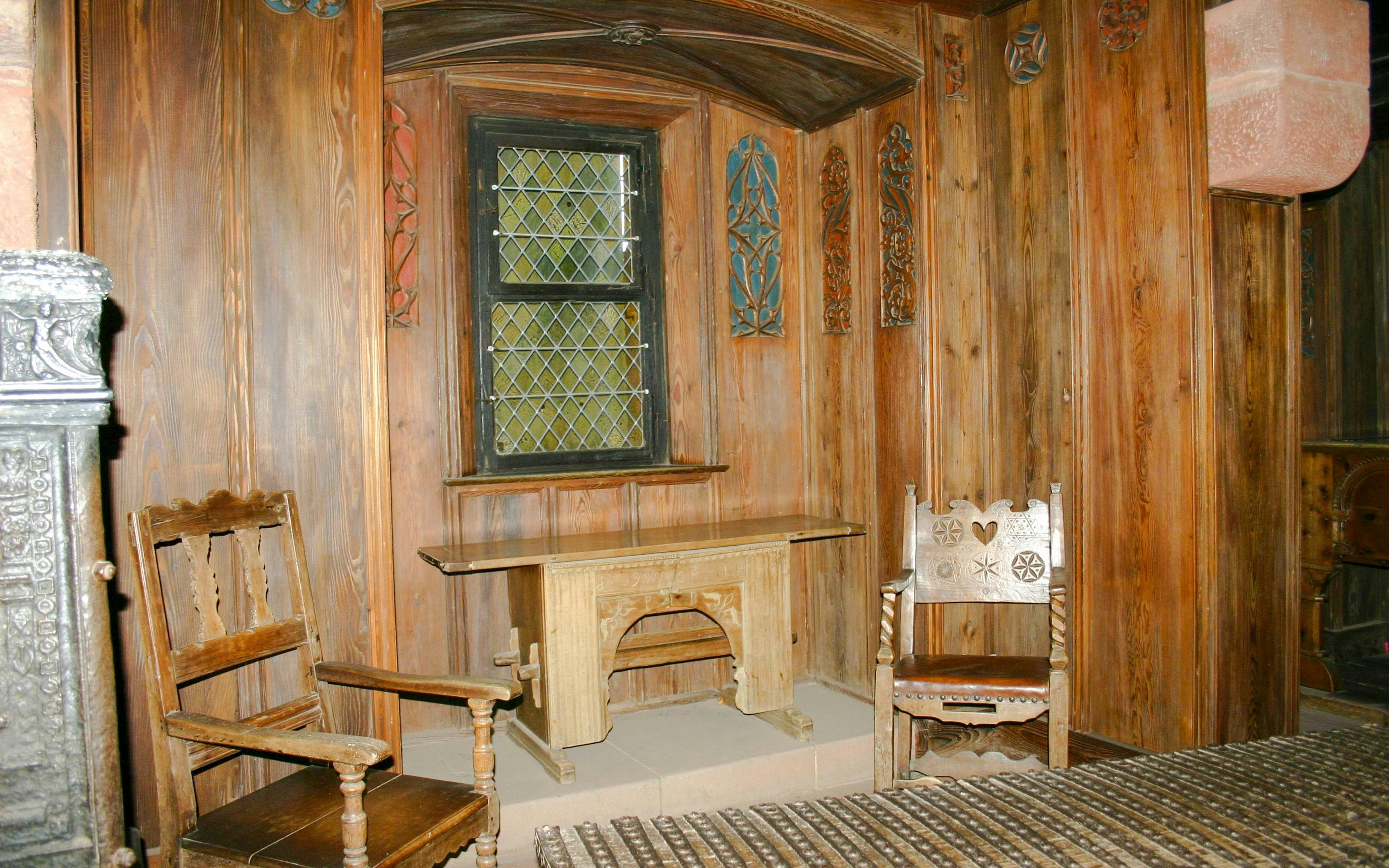
Interior of Haut-Koenigsbourg Castle with wooden chairs and ornate window.
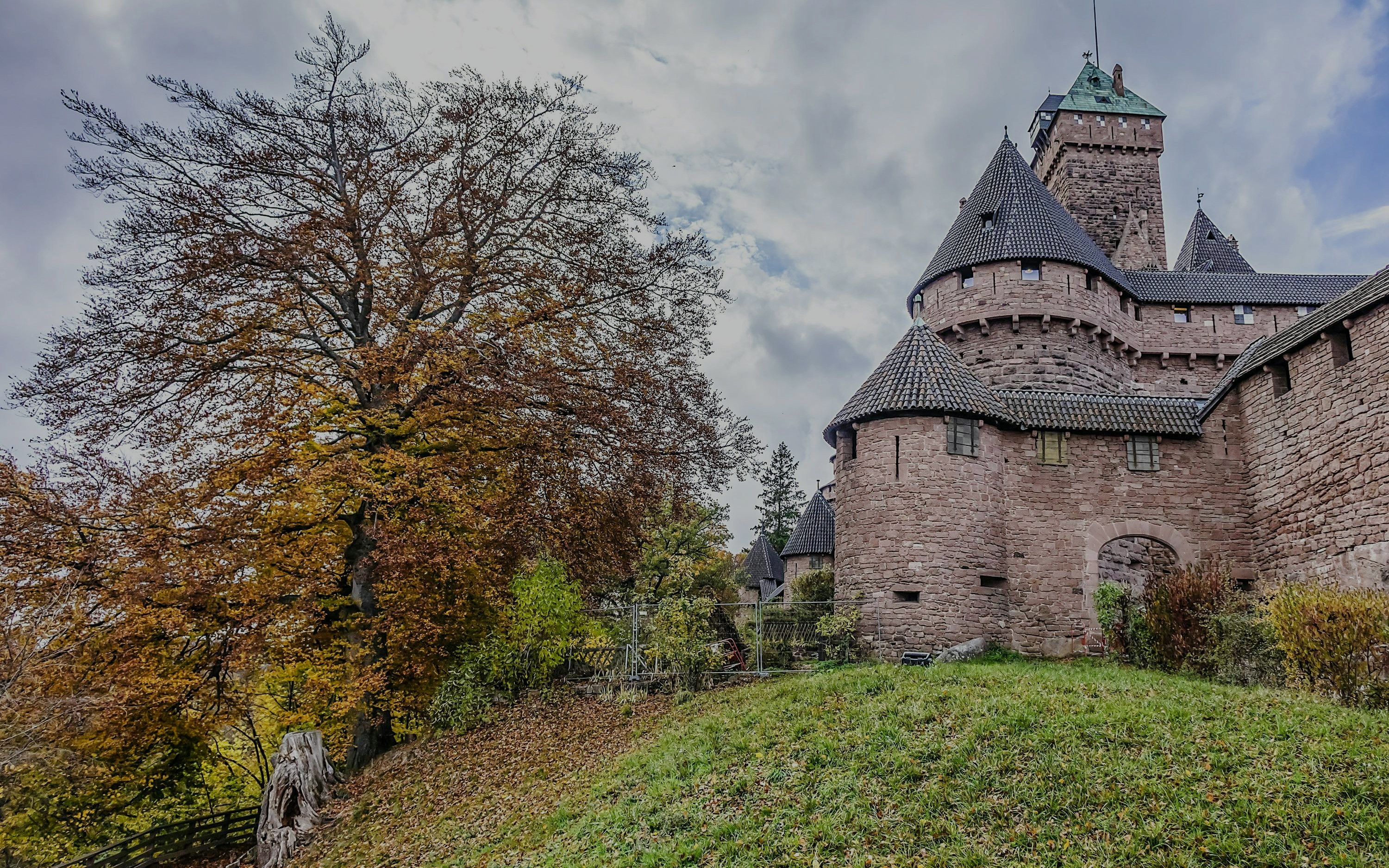
Haut-Koenigsbourg castle with autumn trees in Alsace, France.

Architecture of Haut-Koenigsbourg Castle

Haut-Koenigsbourg Castle is a striking example of medieval military architecture, combining defensive strength with noble living spaces. Built from distinctive pink Vosges sandstone, the fortress features thick curtain walls, watchtowers, drawbridges, battlements, and a multi-level layout adapted to its rocky hilltop setting. Its early 20th-century restoration preserved many Gothic and Renaissance elements, creating one of the most complete medieval castle complexes in France.

History of Haut-Koenigsbourg Castle
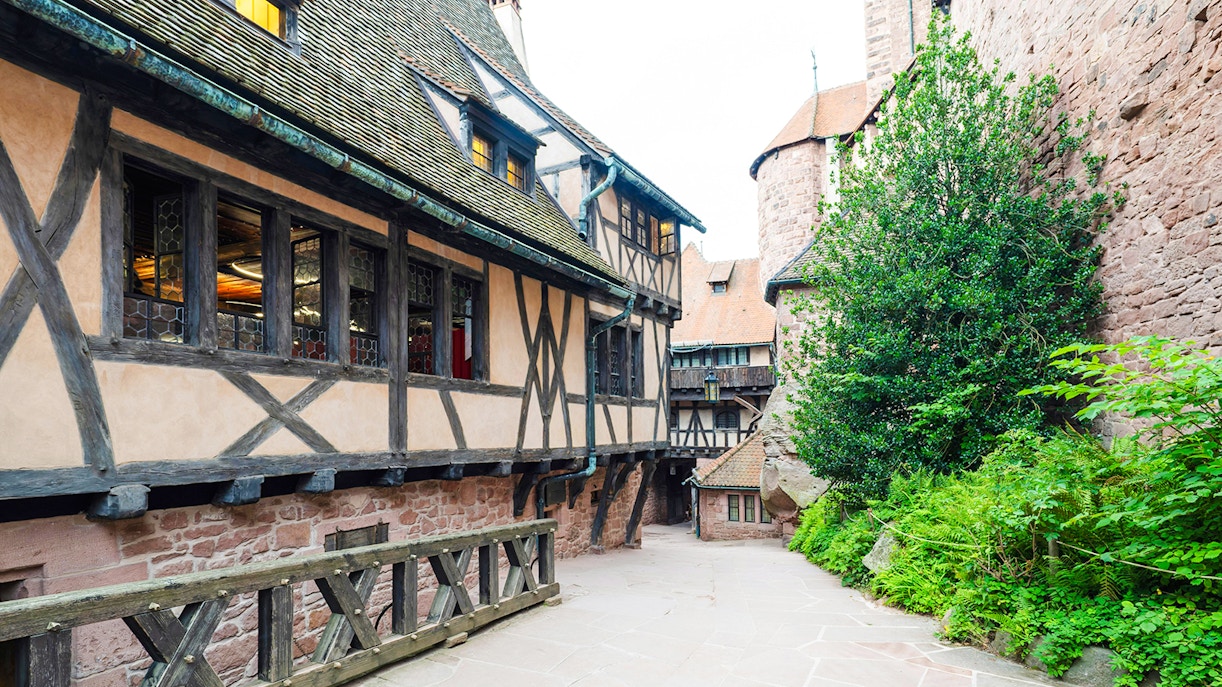
Medieval timber-framed alley inside Haut Koenigsbourg Castle, France.
  • 1147: The castle is mentioned for the first time in historical records as Staufenberg Castle, controlled by the Hohenstaufen dynasty.
  • 1462: After being damaged during regional conflicts, the fortress is captured and partially destroyed.
  • 1479: The castle is rebuilt by the Counts of Thierstein, who modernize its defenses to withstand the growing use of artillery.
  • 1633: During the Thirty Years' War, Swedish forces besiege and destroy the castle. It is abandoned and remains in ruins for more than two centuries.
  • 1899: The ruins are gifted to Wilhelm II by the city of Sélestat while Alsace is part of the German Empire.
  • 1900–1908: A major restoration project transforms the ruins into the imposing castle seen today, based on historical research and surviving medieval structures.
  • 1919: Following the end of World War I, Alsace returns to France and the castle becomes French state property.
  • Today: Haut-Koenigsbourg is one of France's most visited castles, attracting visitors with its remarkably preserved medieval architecture and panoramic views over Alsace.

Frequently asked questions about Haut-Koenigsbourg Castle

The castle sits atop a hill in the Alsace region of northeastern France, near the towns of Sélestat and Ribeauvillé, about 50 km south of Strasbourg.