Visiting Haut-Koenigsbourg Castle: your complete guide
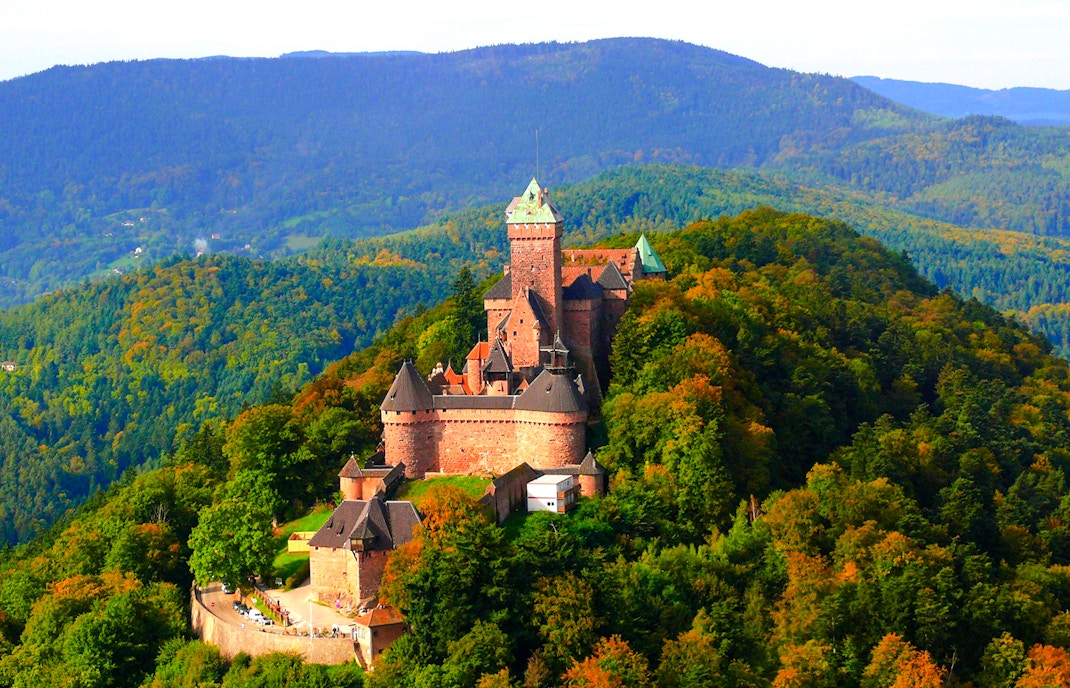
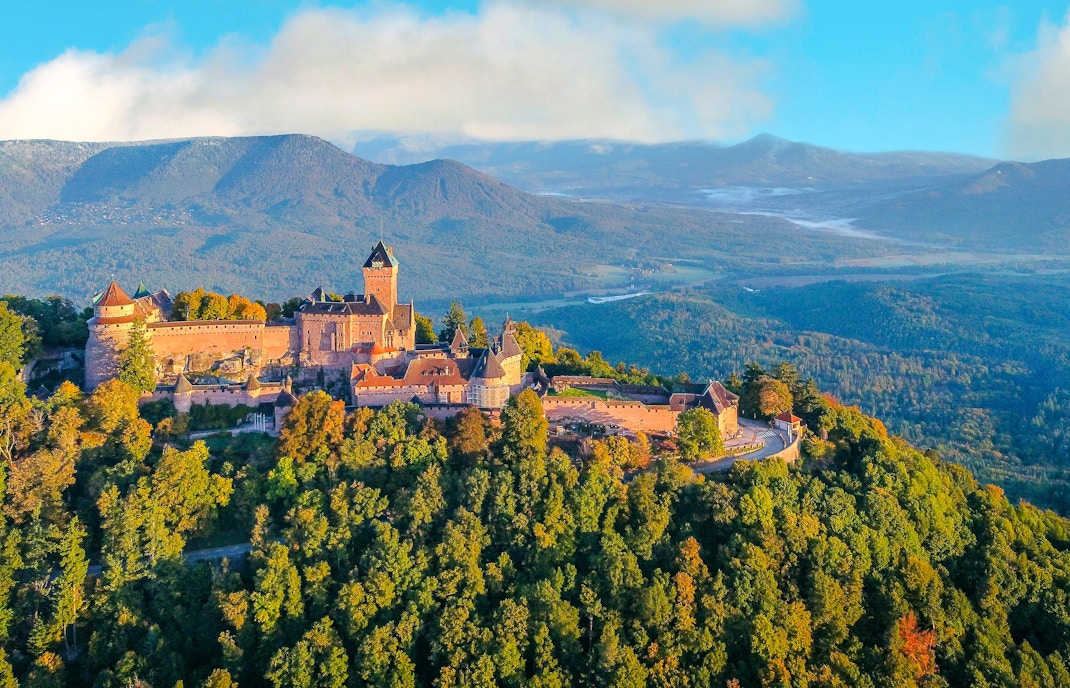
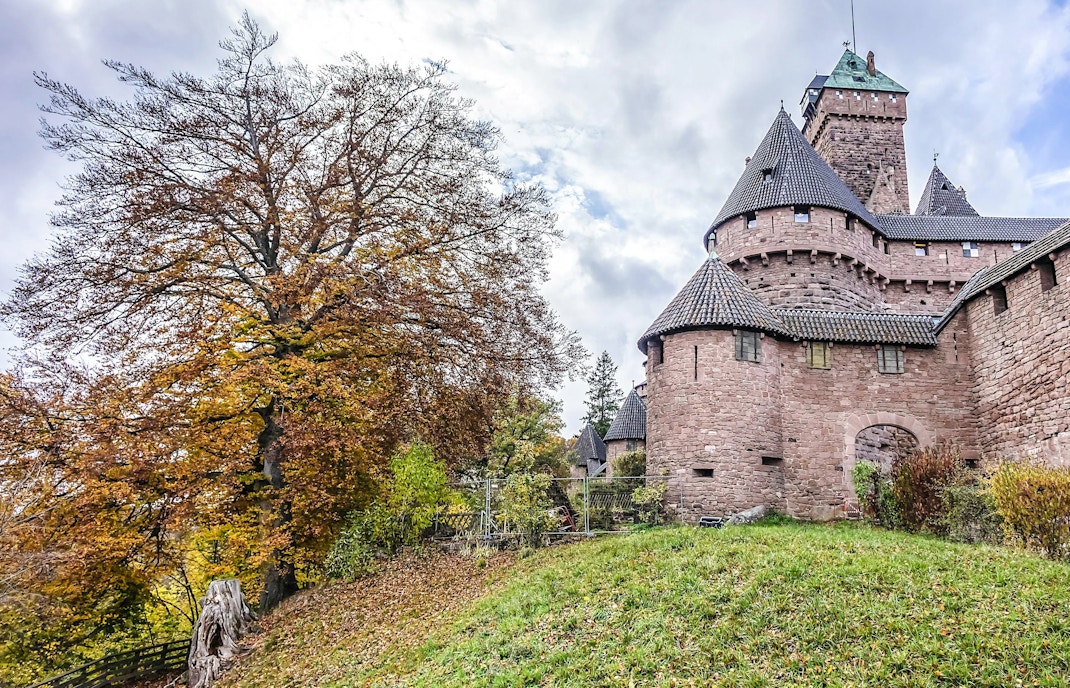
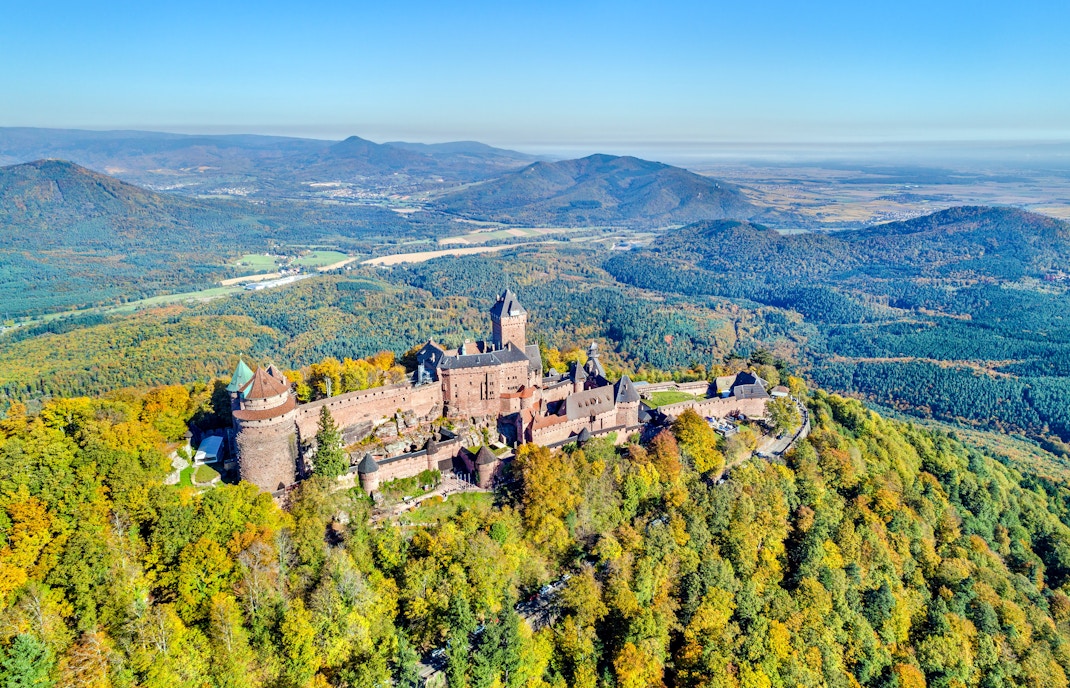
Haut-Koenigsbourg Castle is a restored medieval hilltop fortress best known for its ramparts, furnished rooms, and sweeping Alsace views. The visit feels more physical than many first-timers expect, with an uphill approach, a stair-heavy interior route, and plenty worth slowing down for once you're inside. The biggest difference between a rushed visit and a rewarding one to the castle is timing your entry around the mid-morning crowds. This guide covers when to go, how long to allow, tickets, and what not to miss.
Quick overview: Haut-Koenigsbourg Castle at a glance
If you're deciding when to go and how much planning this castle really needs, start here.
When to visit: Open daily, usually 9:30am–6pm, except January 1 and December 25–26; late afternoon is noticeably calmer than mid-morning in summer because many coach groups arrive earlier and the terraces are quieter by 4pm.
Getting in: Self-guided entry is the main option here, and booking ahead matters most in July, August, and sunny fall weekends.
How long to allow: 1.5–2 hours suits most visitors, and it stretches toward the longer end if you linger on the ramparts, use an Audioguide, or add temporary exhibitions.
What most people miss: The chapel is often one of the quietest spaces in the castle, and the kitchen deserves more than a quick pass because its ovens, hearths, and work areas explain daily life better than the grand rooms do.
Is a guide worth it? Not for most visitors, because the route works well self-guided and an Audioguide adds enough context unless you specifically want live historical interpretation.
Where and when to go
How do you get to Haut-Koenigsbourg Castle?
The castle sits above Orschwiller in central Alsace, about 50 minutes by road from Strasbourg and high enough above the plain that the final approach feels remote even on a busy day.
Car: Main parking lot → 5–10 min uphill walk → the easiest option from Strasbourg, Colmar, or the wine villages.
Seasonal shuttle: Sélestat station navette (April–October) → drops near the castle approach → useful if you're not driving and want to avoid a taxi.
Train + shuttle: TER to Sélestat → connect to the seasonal navette → the simplest public transport option in shuttle season.
Taxi / rideshare: Sélestat → drop-off near the entrance path → the most practical fallback outside shuttle season.
Getting here from nearby cities
Many visitors treat the castle as a regional day trip, and the easiest bases are Strasbourg, Colmar, and Sélestat.
From Strasbourg
Distance: 58 km
Travel time: About 50 min by car
Time to budget: Works best as a half-day outing, especially if you want to add a wine village or Kintzheim attraction afterward.
From Colmar
Distance: 27 km
Travel time: About 35 min by car
Time to budget: This is the easiest major-city base if you want a shorter drive and more time inside the castle.
From Sélestat
Distance: 17 km
Travel time: About 1 hr total via TER connections and the seasonal shuttle, or much less by taxi/car
Time to budget: Best if you're using public transport, but build in buffer time because the uphill location limits backup options.
Which entrance should you use?
The castle uses a single visitor entrance, and the most common mistake is underestimating how much time the uphill walk and ticket check add before you actually start the route.
Main entrance: Located off the approach from the parking area and shuttle drop-off. Expect 10–20 min total between the walk up and entry checks during busy summer mornings.
When is Haut-Koenigsbourg Castle open?
Monday–Sunday: Usually 9:30am–6pm
January 1, December 25, and December 26: Closed
Last entry: 1 hour before closing
First Sunday from November to March: Free entry day
Third weekend of September: Free entry during European Heritage Days
When is it busiest? July and August, plus sunny weekends in spring and early fall, bring the tightest rooms and the slowest entrance flow.
When should you actually go? Late afternoon outside school holidays is the easiest sweet spot here because the mid-morning tour wave has usually thinned and the views are better in softer light.
How do you get around Haut-Koenigsbourg Castle?
Landmark layout
Haut-Koenigsbourg Castle is best explored on foot and usually takes 1.5–2 hours, with enough changes in level and viewpoint that a loose route helps more than you might expect.
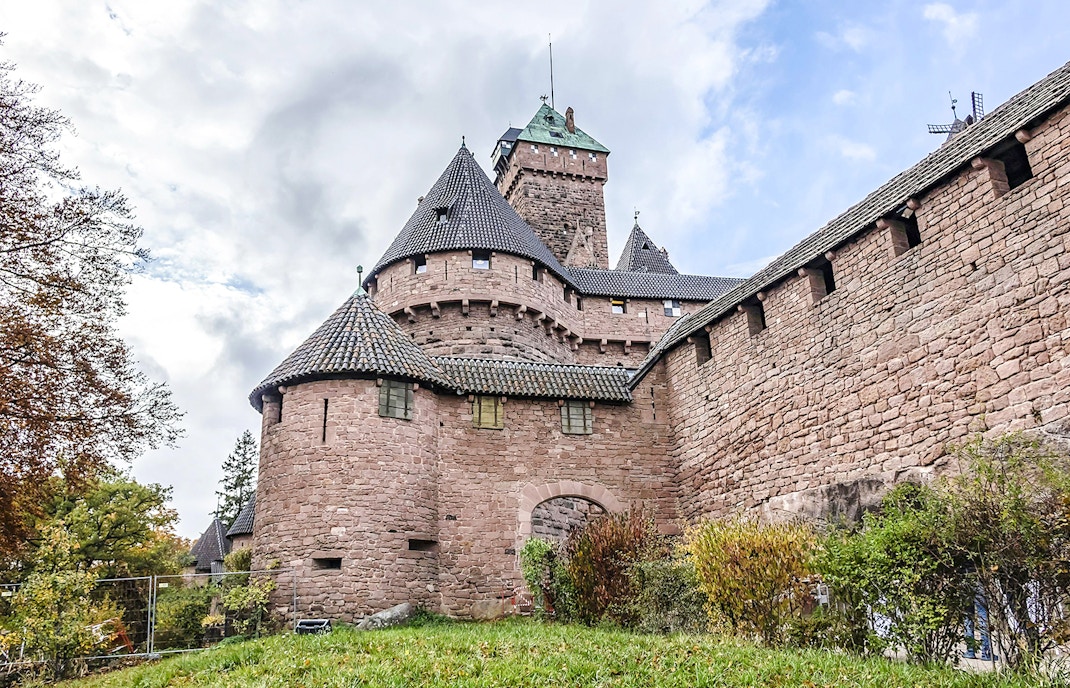
The main focal point sits beyond the defensive entrance sequence, so the visit builds inward from the gatehouse and courtyard before opening out to the halls, living spaces, and artillery terraces.
Defensive entrance and courtyard: Drawbridge, gatehouse, and first fortification details → allow 10–15 min.
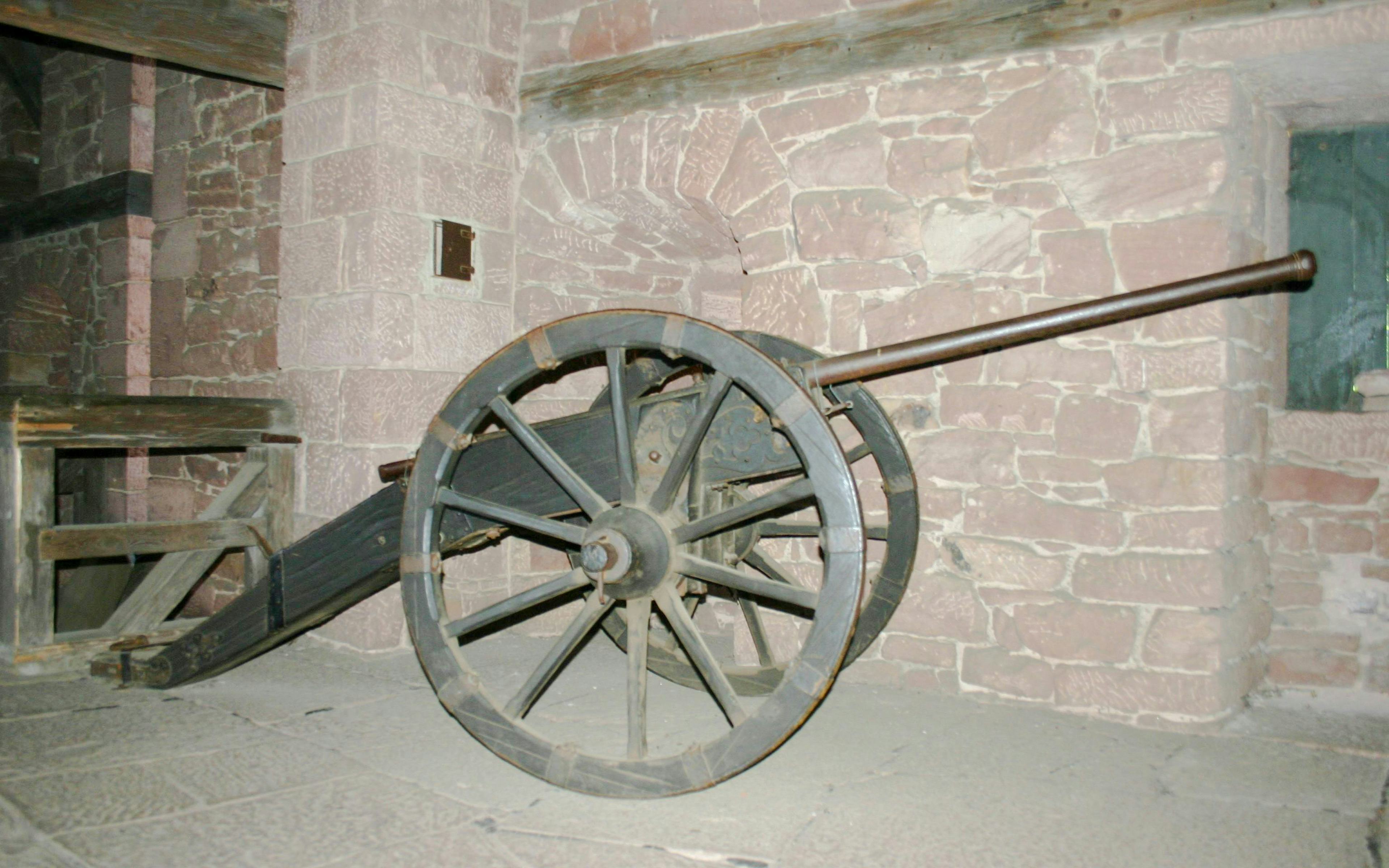
Grand Bastion: Cannons, military views, and the widest panorama over Alsace → allow 15–20 min.
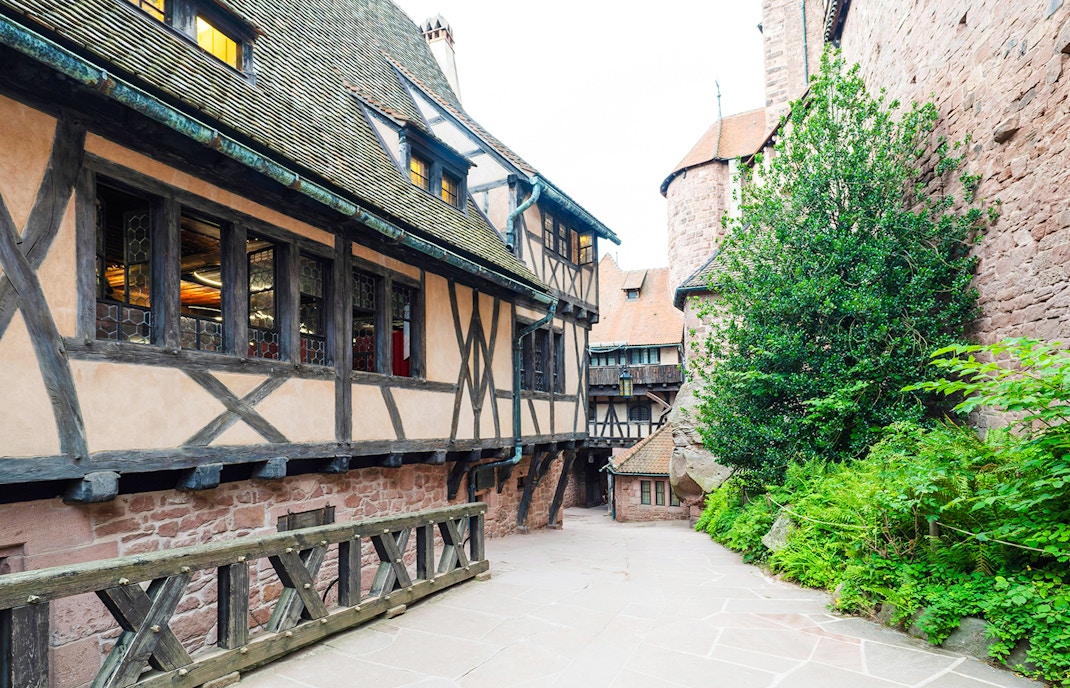
Great Hall and period rooms: Banquet spaces, private chambers, timbered interiors, and furnishings → allow 25–35 min.
Kitchen and chapel: Daily-life spaces and one of the quietest corners in the castle → allow 15–20 min.
Suggested route: Move with the castle's natural sequence from entrance to courtyard, then save the Grand Bastion for later if the weather is clear, because most visitors rush there first and miss how much quieter it feels once the early crowd moves on.
Maps and navigation tools
Map: On-site visitor material and the Audioguide cover the main route → pick them up before you start the climb through the entrance sequence.
Signage: Wayfinding is generally clear, but the route is vertical enough that a map or Audioguide helps you keep track of what you've already seen.
Audio guide / app: Audioguides are available in multiple languages on-site and add real value here because the castle's defensive logic and room functions are easy to miss on a quick walk-through.
Large outdoor POIs only: Not applicable.
💡 Pro tip: Download your ticket before you arrive, because mobile network at the castle is unreliable and this is the wrong place to be searching your inbox at the gate.
What can you see from Haut-Koenigsbourg Castle?
1/5
Grand Bastion
Attribute — Era: Late medieval artillery platform
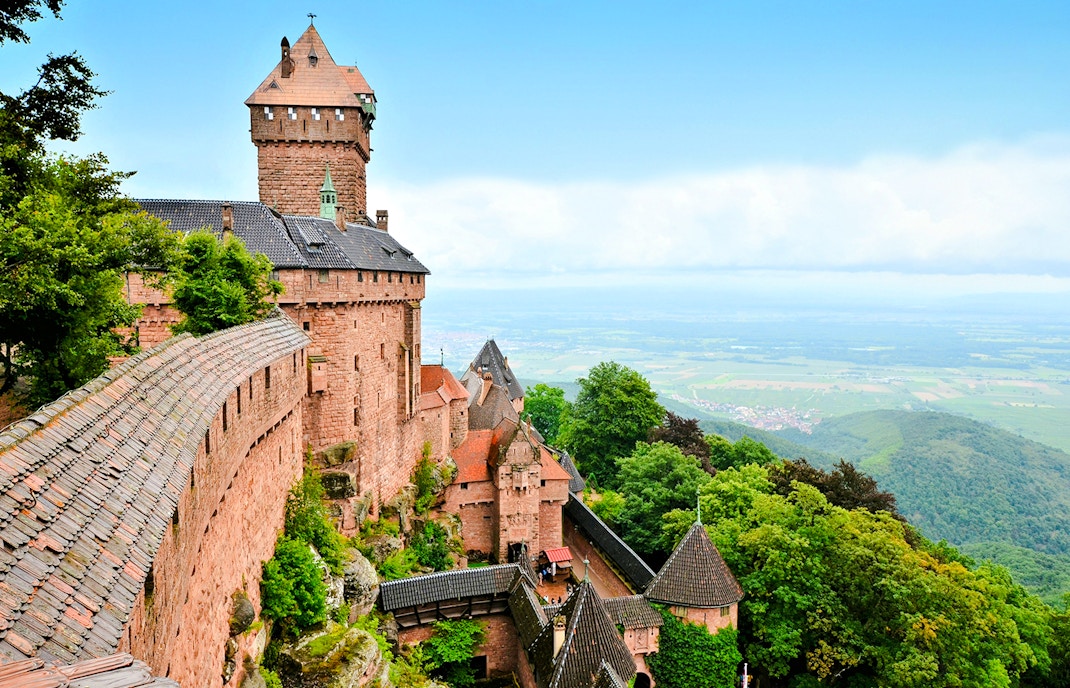
This is the castle's most dramatic military space and the place that best explains why the site mattered strategically. The restored cannons, thick walls, and elevated terrace make the defense system feel immediate rather than abstract. What most visitors rush past is how much of the surrounding geography you can actually read from up here: vineyards, the Alsace plain, the Black Forest, and, on very clear days, even the Alps.
Where to find it: Follow the main visitor route upward from the central circuit toward the outer artillery terrace.
Emperor's Great Hall
Attribute — Type: Ceremonial banquet hall
The Great Hall is the room that delivers the castle's most theatrical interior moment, with heavy beams, long tables, and the scale you'd expect from a restored fortress meant to impress. It is easy to photograph and easy to hurry through, but the fireplaces, painted surfaces, and window light are what give it atmosphere. Most visitors miss that this is as much an early-20th-century restoration statement as a medieval fantasy.
Where to find it: On the main interior route after the defensive and courtyard sections, in the upper residential spaces.
Castle kitchen
Attribute — Type: Working domestic space
The kitchen gives you the clearest sense of how the fortress actually functioned day to day. The oversized hearths, hanging cookware, and large bread oven make this one of the most legible rooms in the castle, especially if you're visiting with children. Many people move through it quickly on the way to the bigger halls, but it is one of the best places to understand labor, scale, and daily logistics.
Where to find it: Along the main interior circuit, near the residential and service rooms.
Chapel
Attribute — Type: Sacred space
The chapel is smaller and quieter than the rest of the castle, which is exactly why it stands out. Its vaulted ceiling and restrained decoration create a break from the busier, more theatrical rooms, and it often feels surprisingly calm even on crowded days. What most visitors miss is simple: they do not linger, even though this is one of the least congested stops on the route.
Where to find it: Within the interior residential circuit, after the larger halls and service rooms.
Defensive entrance and drawbridge
Attribute — Type: Fortified access point
This is the part of the visit that sets the tone before you reach the showcase rooms. The drawbridge, gatehouse, arrow slits, and layered defenses make the castle's military purpose obvious right away. Because everyone is focused on getting in, many visitors forget to stop and actually look up at the murder holes and defensive design around them.
Where to find it: At the very start of the visit, before the lower courtyard and main interior route.
Facilities and accessibility
🍽️ Pavilion café: The on-site café works best for drinks and a simple break after your circuit rather than a destination lunch.
🛍️ Gift shop: You'll reach the shop at the end of the visit, which is the easiest time to browse since carrying purchases through the stair-heavy route is awkward.
🅿️ Parking: A large free parking area serves the castle, but you still need to budget a 5–10 min uphill walk from the lot to the entrance.
📶 Mobile network: Reception is unreliable at the castle, so save your ticket offline before you arrive instead of relying on signal at the gate.
🎧 Audioguide: On-site Audioguides in multiple languages are the simplest way to add context if you're visiting without a live guide.
🎟️ Temporary exhibitions and events: Entry can include seasonal animations, free events, and temporary exhibitions, but some workshops require advance reservation.
♿ Mobility: Accessibility is limited because the castle approach is uphill and the historic route includes many stairs, but adapted routes are available for visitors with reduced mobility.
👁️ Visual impairments: The castle offers adapted experiences for visitors with visual disabilities, so ask staff about the most suitable route when you arrive.
👂 Hearing support: Adapted experiences are also available for visitors with hearing disabilities, which matters because the site is large and many cues are spatial rather than linear.
🧠 Cognitive and sensory needs: Visitors with intellectual disabilities can use adapted experiences, and winter weekdays are the easiest low-pressure window if you want less crowding.
👨👩👧 Families and strollers: Strollers are not allowed on the interior circuit, so families with babies will find a carrier much easier from start to finish.
This is a strong visit for school-age children who like castles, cannons, kitchens, and climbable-looking architecture, but it is less easy with toddlers because the route is steep and buggy-free.
🕐 Time: Around 1.5 hours is realistic with children if you focus on the entrance, artillery terrace, kitchen, and the biggest halls.
🏠 Facilities: The easiest built-in family advantage here is space to move in the exterior areas and courtyards before you commit to the tighter interior route.
💡 Engagement: Let children look for the most defensive features first, like the drawbridge, arrow slits, and cannons, because that gives the rest of the route a story to follow.
🎒 Logistics: Bring a baby carrier instead of a stroller, download your tickets before arrival, and avoid the busiest late-morning window if your child tires easily in queues.
📍 After your visit: Montagne des Singes and La Volerie des Aigles are both nearby, making them easy same-day add-ons if you want a more family-driven afternoon.
Rules and restrictions
What you need to know before you go
Entry requirement: A valid ticket is required for everyone over the free-entry age threshold, and online booking is the easiest way to avoid the longest summer queues.
Bag policy: Travel light, because the interior route is stair-heavy, strollers are not allowed inside, and there is no advantage to carrying large bags through narrow spaces.
Re-entry policy: Plan to treat this as one continuous visit, because the uphill approach and entry process make stepping out mid-visit more inconvenient than most city attractions.
Not allowed
🚫 Food and drink: Eating is best left to the café or after your visit, especially since the historic interior is not set up for casual snacking on the move.
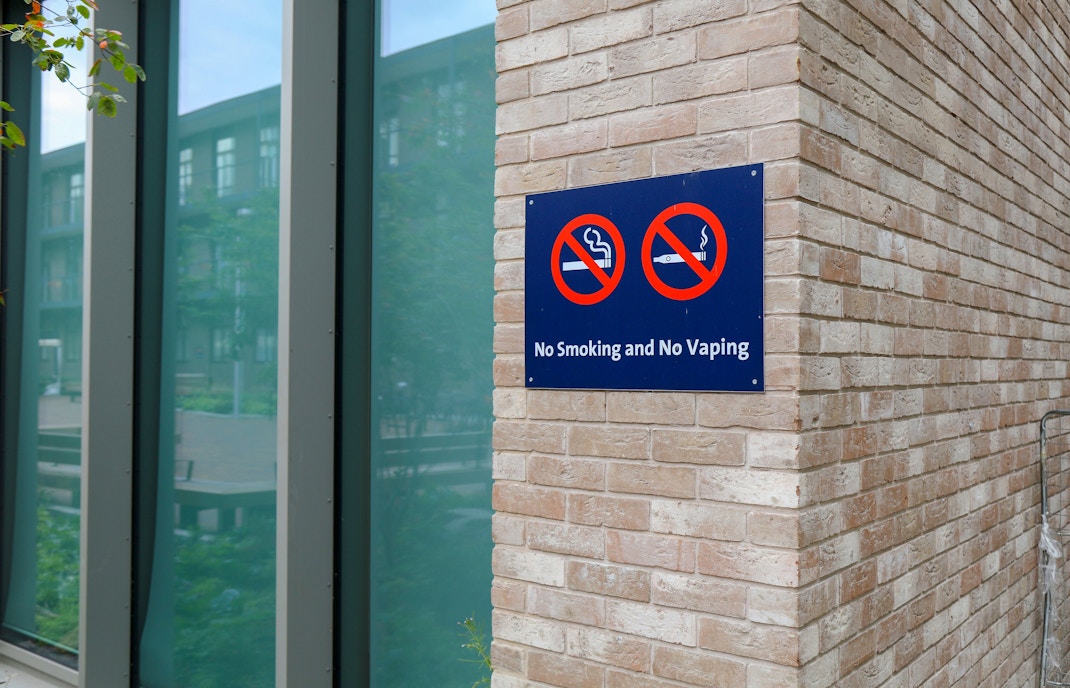
🚬 Smoking and vaping: Smoke away from the historic visitor route and follow any on-site signage for permitted outdoor areas only.
🐾 Pets: Pets are not allowed inside the castle, but assistance dogs are permitted.
🖐️ Touching and climbing: Do not climb on defenses or handle historic features, because many surfaces are original or carefully restored.
Photography
Photography is generally one of the pleasures of visiting Haut-Koenigsbourg Castle, especially on the ramparts and panoramic terraces. The important distinction is practical rather than hidden: some interior spaces are tighter and darker, so flash quickly becomes intrusive even where photos are allowed. Travel as if tripods and bulky photo gear will slow you down, because the route is narrow, vertical, and crowded at peak times.
Good to know
Mobile signal: There is no reliable mobile network at the castle, so keep your ticket downloaded before you start the uphill walk.
Free-entry days: The first Sunday from November to March and the European Heritage Days weekend can save money, but they are not the calmest times to visit.
Practical tips
Booking and arrival: Book ahead for July, August, and sunny fall weekends, then aim to reach the parking lot 20–30 min before you want to enter so the uphill walk and ticket check don't eat into your visit.
Pacing: Don't burn all your energy at the start climbing quickly to the best viewpoints; the kitchen, Great Hall, and bastion all reward a slower pace, and the stair-heavy layout feels longer on the way back out.
Crowd management: Late afternoon often works better than late morning here, because coach traffic tends to cluster earlier and the terraces feel noticeably freer once that first wave has passed.
What to bring or leave behind: Bring solid shoes and a downloaded ticket, and leave the stroller in the car because the interior route has too many steps and narrow transitions to make it worthwhile.
Food and drink: If you're hungry, either keep the on-site café as a quick convenience stop or wait until after the visit for a proper lunch in a nearby village, since breaking the visit in half rarely makes the day easier.
Photos and views: If the forecast is clear, save a little time for the Grand Bastion near the end of your route, when the light is softer and fewer people are crowding the parapet.
Seasonal value: Winter is colder but more atmospheric than many visitors expect, and the first Sunday of the month from November to March can be a useful budget play if you don't mind trading savings for a busier free-entry day.
What else is worth visiting nearby?
Commonly Paired: La Volerie des Aigles
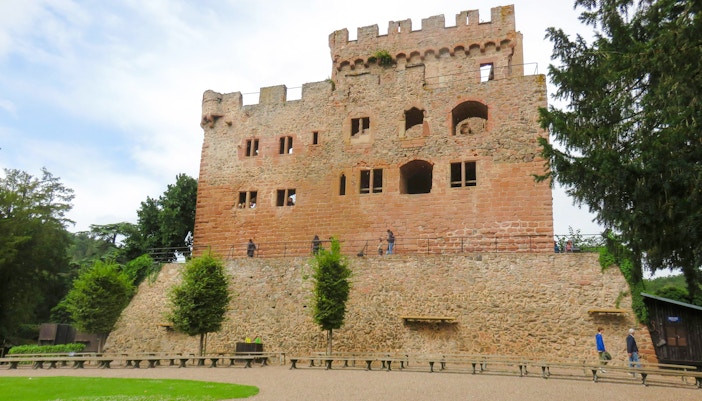
Distance: About 8 km — around 10 min by car Why people combine them: Both sit in the same Kintzheim area, so it's an easy same-day pairing if you want one history stop and one outdoor animal experience without long extra driving.
Commonly Paired: Montagne des Singes
Distance: About 8 km — around 10 min by car Why people combine them: Families often pair the castle with the monkey park because the driving time is short and the second stop shifts the day from stair-heavy history to something more relaxed and interactive.
Also nearby
Riquewihr Distance: About 7 km — around 15 min by car Worth knowing: It is one of the easiest wine-route villages to add after the castle if you want a slower walk, lunch, or a few hours of Alsace atmosphere.
Kaysersberg Distance: About 14 km — around 20 min by car Worth knowing: It takes a little longer to reach than Riquewihr, but it works well if you want a fuller village stop rather than just a quick wander.
Eat, shop and stay near Haut-Koenigsbourg Castle
On-site: Castle pavilion café, with simple snacks and drinks, is worth using as a convenience stop after your route rather than planning your whole meal around it.
Riquewihr old town cafés (about 15 min by car, Riquewihr): Best if you want a proper post-castle lunch and a walk through one of Alsace's most photogenic villages.
Kintzheim lunch stops (about 10 min by car, Kintzheim): The most useful choice if you're pairing the castle with Montagne des Singes or La Volerie des Aigles the same day.
Sélestat town-center restaurants (about 20 min by car, Sélestat): Better if you want more choice than the immediate castle area offers and do not mind eating later in the day.
💡 Pro tip: If you're visiting in summer, eat after the castle rather than before it, because the busiest entry window falls in late morning and a long lunch first usually means more crowding inside.
Castle gift shop: The most convenient place for souvenirs, and easiest to browse because you pass it naturally on the way out.
Riquewihr old town shops: A better stop if you want local Alsace food gifts, wine, or village-style souvenirs rather than castle merchandise.
The immediate castle area is scenic and peaceful, but it is not the most convenient base unless you're doing a road trip through the wine route. You'll get easier logistics, more dining choices, and better evening atmosphere by staying in a larger nearby town and driving up for the visit.
Price point: Small village stays tend to be quieter and more limited in choice, while Colmar and Strasbourg give you a wider spread of mid-range and higher-end options.
Best for: Travelers with a car who want an early or late castle visit and plan to combine the region's villages, wineries, and animal parks over more than one day.
Consider instead: Colmar or Sélestat are better practical bases for shorter trips, while Strasbourg makes more sense if the castle is just one stop in a broader city-focused itinerary.
Frequently asked questions about visiting Haut-Koenigsbourg Castle
Most visits take 1.5–2 hours. That covers the entrance sequence, main rooms, kitchen, chapel, and time on the ramparts, but you could stretch closer to 2.5 hours if you use an Audioguide, pause often for photos, or visit on a clear day and spend extra time at the Grand Bastion.
No, you do not always need to book in advance, but it is the smarter move in summer and on sunny fall weekends. The castle can be visited flexibly outside peak periods, yet pre-booking helps you avoid the longest queues and removes stress when parking and arrival times are already a little less straightforward than a city-center museum.
It is only really worth considering on peak summer days or if you're arriving late morning. For most visitors, a standard pre-booked entry ticket is enough, especially if you come at opening or later in the afternoon when the heaviest visitor wave has already passed through.
Aim to be at the parking area 20–30 minutes before your intended entry time. That gives you enough buffer for the uphill walk from the lot, the approach to the entrance, and ticket checks without starting the visit feeling rushed.
Yes, but small is better. The interior route includes stairs, narrow passages, and plenty of stops where bulky bags quickly become annoying, so this is one place where traveling light genuinely improves the visit.
Yes, photos are one of the best reasons to visit, especially on the ramparts and panoramic terraces. Just be realistic about the setting: darker interior rooms and narrow routes make large photo setups awkward, and flash becomes intrusive in tighter spaces.
Yes, the castle works well for groups, but timing matters. If your group arrives in the middle of the late-morning rush, rooms can feel tight and the entrance flow slows down, so earlier or later slots are easier to manage.
Yes, it is a good family visit for children who like castles, cannons, and big medieval spaces. The main challenge is physical rather than cultural: the route is uphill, stair-heavy, and strollers are not allowed inside, so families with very young children should plan around that.
Only partly. The castle offers adapted routes for visitors with reduced mobility and other disabilities, but overall wheelchair accessibility is limited because this is a historic fortress with steep approaches, level changes, and many stairs.
Yes, there is an on-site café for a quick break, and more substantial lunch options are easier in nearby villages and towns after your visit. Most people find it simpler to treat the café as a convenience stop and save their main meal for Riquewihr, Kintzheim, or Sélestat.
Yes, Audioguides are available on-site and are worth considering if you want more context without joining a live tour. They are especially useful here because the defensive layout, room functions, and restoration choices are easy to overlook on a fast self-guided walk.
No, strollers are not allowed on the interior circuit. If you're visiting with a baby or toddler, a carrier is the easier choice from the parking area all the way through the stair-heavy route.
Explore a 900-year-old medieval fortress above the Alsace plains on a flexible self-guided visit.
Everything you get: Enjoy self-guided entry to Haut-Koenigsbourg Castle during opening hours, with access to its restored rooms, terraces, ramparts, and exterior spaces. Your visit may also include temporary exhibitions, seasonal animations, free events, workshops, and adapted experiences for different audiences.
Why choose this: It’s a flexible, scenic stop that fits easily into your Alsace itinerary, giving you the freedom to explore a hilltop medieval landmark without committing to a fixed tour schedule.
Inclusions
#
Entry ticket for a self-guided visit
Access to permanent rooms and terraces
Access to temporary exhibitions and animations
Access to the castle's exterior spaces
Access to the castle during opening hours
Accessibility
Wheelchair access: Wheelchair accessibility is limited throughout the castle.
Adapted routes: The castle offers adapted routes for visitors with reduced mobility, hearing, visual, and intellectual disabilities.
What’s not allowed
Pets: Pets are not allowed inside the castle, but assistance dogs are permitted.
Additional information
Footwear: Wear comfortable shoes, as the visit involves significant walking.
Mobile network: There is no mobile network at the château, so download your tickets in advance.
Last entry: Last entry is 1 hour before the castle closes.
Free entry days: Entrance is free for all visitors during the European Heritage Days on the third weekend of September.
Seasonal free Sundays: Entrance is free on the first Sunday of the month from November to March.
Opening hours: The castle is usually open from 9:30am to 6pm, but hours may vary, so check the official site for alerts.
Reservations: Some events and workshops require a mandatory reservation.
Weather: The weather can be variable with a risk of storms, so check the forecast before your visit.
Note: There is a break of 1 hour from 12pm - 1pm in the month of Jan to Mar and Nov-Dec.
These tickets are valid for 12 months from the date of purchase.